How Steel Conduits Are Made: A Complete Guide to EMT, IMC & Rigid Conduit Manufacturing
How Steel Conduits Are Made: A Complete Guide to EMT, IMC & Rigid Conduit Manufacturing
Steel conduits are essential components in modern electrical installations, providing mechanical protection and supporting safe wiring systems in commercial, industrial, and residential projects. However, few engineers, distributors, or contractors have seen how these conduits are actually manufactured.
With over 20 years of production experience, ALEX offers a detailed, step-by-step explanation of how EMT, IMC, and Rigid steel conduits are made according to ANSI, and IEC standards. This guide is one of the most complete and accurate steel conduit manufacturing resources available.
1. Overview of Steel Conduit Types
Steel conduits fall into three main categories, each with specific mechanical properties and industry standards.
EMT Conduit (Electrical Metallic Tubing)
Thin-wall, non-threaded
Easy to bend
Standard: ANSI C80.3
Suitable for indoor and commercial installations
IMC Conduit (Intermediate Metal Conduit)
Medium-wall, threaded
Stronger than EMT
Standard: ANSI C80.6
Suitable for outdoor and industrial environments
Rigid Steel Conduit (RSC)
Thick-wall, threaded
Highest strength and corrosion resistance
Standard: ANSI C80.1
Designed for harsh environments
(Internal link placeholders available for EMT, IMC, and Rigid Category Pages.)
2. Raw Materials: Steel Coils and Zinc Coating
All steel conduits begin with galvanized steel coils. The quality of the coil determines the final conduit’s:
Strength
Bendability
Welding stability
Surface finish
Corrosion resistance
High-quality conduit requires consistent steel chemistry, controlled hardness, and an even zinc coating layer.
3. Step-by-Step Steel Conduit Manufacturing Process
Below is the complete, 8-step manufacturing process used in professional conduit factories.
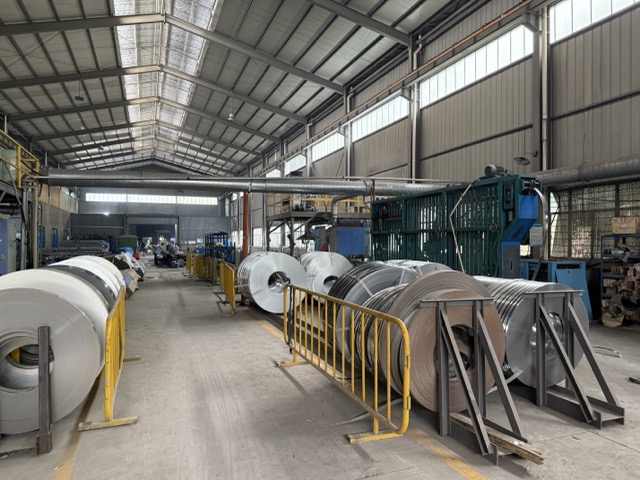
Step 1: Uncoiling and Leveling
Steel coils are placed on an uncoiler and fed through leveling rollers to remove internal stress and ensure the strips are flat and ready for forming.
Step 2: Forming the Tube
The steel strip passes through a series of forming rollers that gradually bend the material into a round tube. Accurate roller pressure and alignment ensure correct outer diameter and roundness.
Step 3: High-Frequency Welding (HFW)
The edges of the formed tube are heated with high-frequency current and fused together. This welding method produces a clean, strong seam without filler metal, ensuring electrical continuity.
Step 4: Weld Bead Removal (Deburring)
Internal and external weld beads are removed to ensure a smooth interior surface. Proper deburring prevents wire insulation damage and improves compatibility with connectors and couplings.
Step 5: Zinc Coating – Pre-Galvanized (PG) vs Hot-Dip Galvanized (HDG)
Pre-Galvanized (PG) Conduit
Steel is galvanized before forming
Zinc thickness approximately 20 microns
Recommended for indoor environments
Cost-effective option
Hot-Dip Galvanized (HDG) Conduit
Entire pipe is immersed in molten zinc after forming
Zinc thickness approximately 40–55 microns
Superior corrosion protection
Ideal for outdoor and industrial applications
HDG provides the highest corrosion resistance and is often used for Rigid steel conduit.
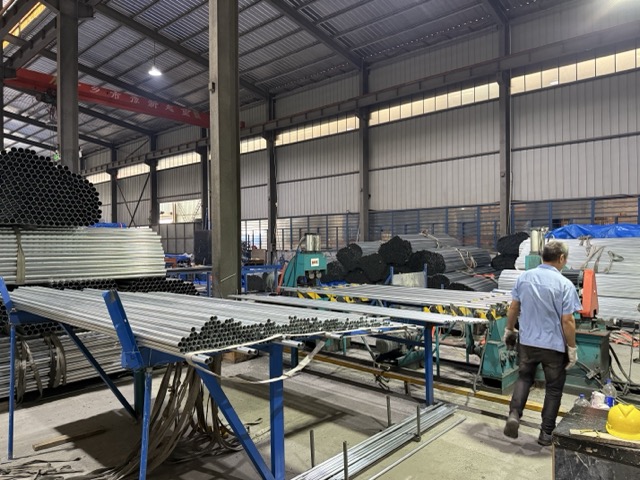
Step 6: Cutting and End Processing
Conduits are cut to the standard length of 3.05 meters. Both ends are deburred and smoothed to ensure safe wire pulling and easy installation.
Step 7: Threading (IMC and Rigid Only)
IMC and Rigid conduits are threaded using NPT standards. Accurate thread depth and pitch are essential for compatibility with couplings and boxes.
Step 8: Final Inspection and Testing
ALEX performs comprehensive inspections on every batch, including:
Wall thickness measurement
Outer diameter tolerance
Zinc coating thickness
Straightness inspection
Surface quality check
Bending tests for EMT
Thread gauge verification for IMC/Rigid
Only conduits that meet all specifications proceed to packaging.
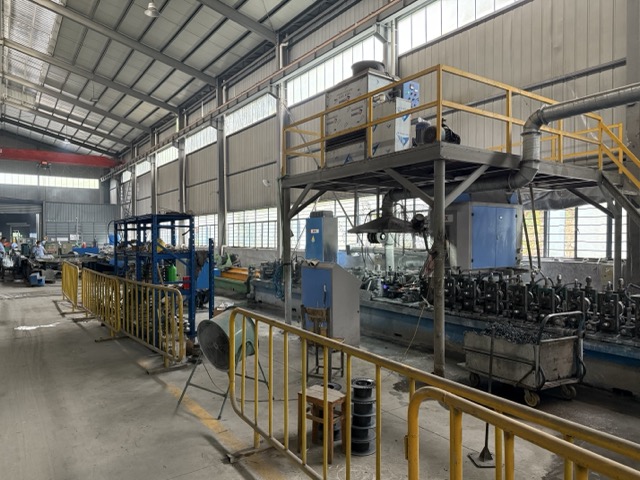
EMT CONDUIT MACHINES
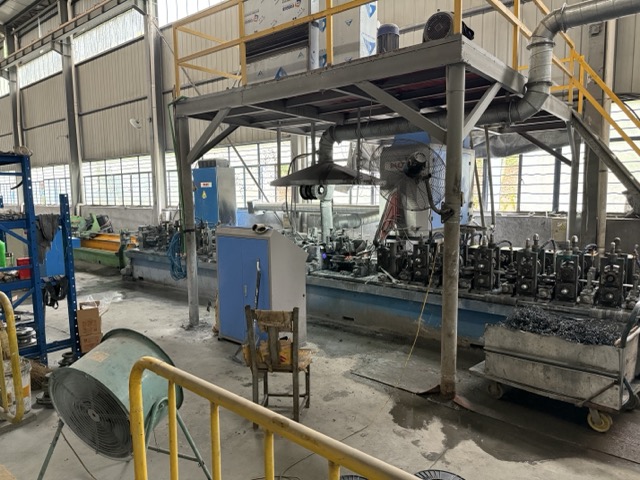
EMT IN PRODUCTION
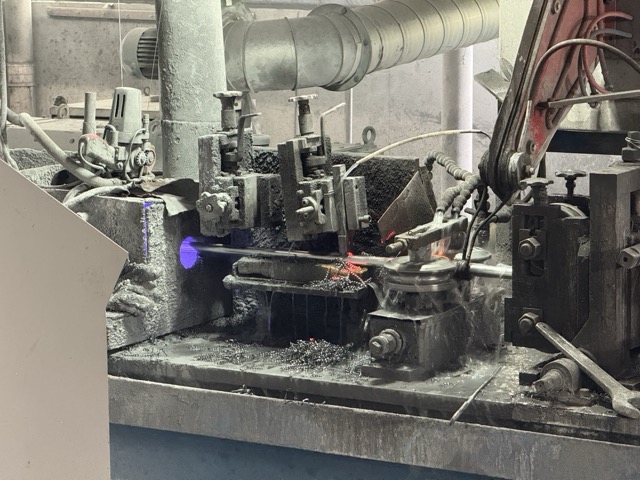
EMT PRODUCTION PROCESS
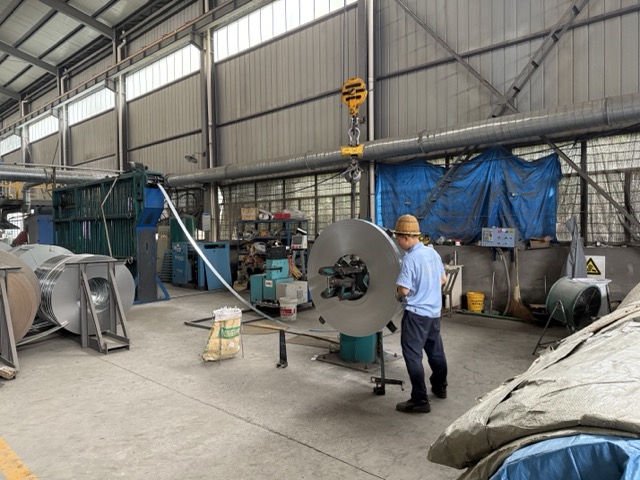
EMT PRODUCTION PROCESS
SMOOTHEN TWO ENDS
4. Manufacturing Differences: EMT vs IMC vs Rigid
| Type | Wall Thickness | Threading | Strength | Typical Use |
|---|---|---|---|---|
| EMT | Thin | No | Moderate | Indoor, commercial |
| IMC | Medium | Yes | High | Outdoor or industrial sites |
| Rigid | Thick | Yes | Maximum | Harsh or corrosive environments |
These differences originate from variations in steel hardness, welding settings, forming pressure, and galvanizing methods.
5. Common Steel Conduit Manufacturing Problems
Many low-cost factories produce conduits that fail during installation due to the following issues:
Cracking during bending caused by overly hard steel or unstable welding
Zinc peeling resulting from insufficient galvanizing
Oval-shaped outer diameter due to poor roller alignment
Rough interior from incomplete weld bead removal
Wall thickness deviation leading to weak mechanical performance
ALEX’s quality control processes are designed specifically to eliminate these common issues.
6. Why ALEX EMT Conduits Bend Better
ALEX uses a carefully selected soft-steel grade for EMT conduits. Combined with optimized forming and strong high-frequency welding, this results in conduits that maintain structural integrity during bending and installation.
ALEX EMT can pass top-bending tests from 1/2 inch to 1 inch without cracking, which is a challenge for many manufacturers using harder steel.
7. Conclusion: Selecting a Reliable Steel Conduit Manufacturer
Producing high-quality EMT, IMC, and Rigid steel conduits requires:
High-grade galvanized steel
Precise forming and welding
Accurate dimensional control
Consistent galvanizing quality
Strict testing and inspection
ALEX ensures quality at every stage, delivering conduits that meet international standards and perform reliably in real-world installations.
FAQ
What is EMT conduit made from?
EMT conduit is made from galvanized steel formed into a thin-wall tube, welded using high-frequency welding, deburred, and inspected for dimensional accuracy and bending performance.
What is the difference between EMT, IMC, and Rigid conduit?
EMT is thin-wall and non-threaded, IMC is medium-wall and threaded, and Rigid is thick-wall with maximum strength and durability.
Is hot-dip galvanized conduit better than pre-galvanized?
Yes. Hot-dip galvanized (HDG) conduit provides a thicker zinc coating and significantly stronger corrosion resistance, especially suitable for outdoor environments.
Why do some EMT conduits crack during bending?
EMT cracks because of hard steel, poor weld seams, inaccurate outer diameter, or unstable manufacturing processes.
ALEX also offers a comprehensive products related to EMT CONDUIT,RIGID CONDUIT,IMC CONDUIT, CONDUIT BOX,CONDUIT BODY, STEEL FLEXIBLE CONDUIT.
ALEX EMT CONNECTORS - SET SCREW TYPE (ZINC),ALEX EMT COUPLINGS - SET SCREW TYPE (ZINC), STRUT CHANNEL.
ALEX has an appearance in Asia, Europe, North America, South America, Africa, Oceania, every continent except Antarctica. With major countries like China, America, Mexico, Canada, Chile, Peru, Colombia, Ecuador, Dominican Republic, Brazil, Egypt, England, Australia and so on.